How do we actually build work environments where people feel good and perform well – consistently, over time?
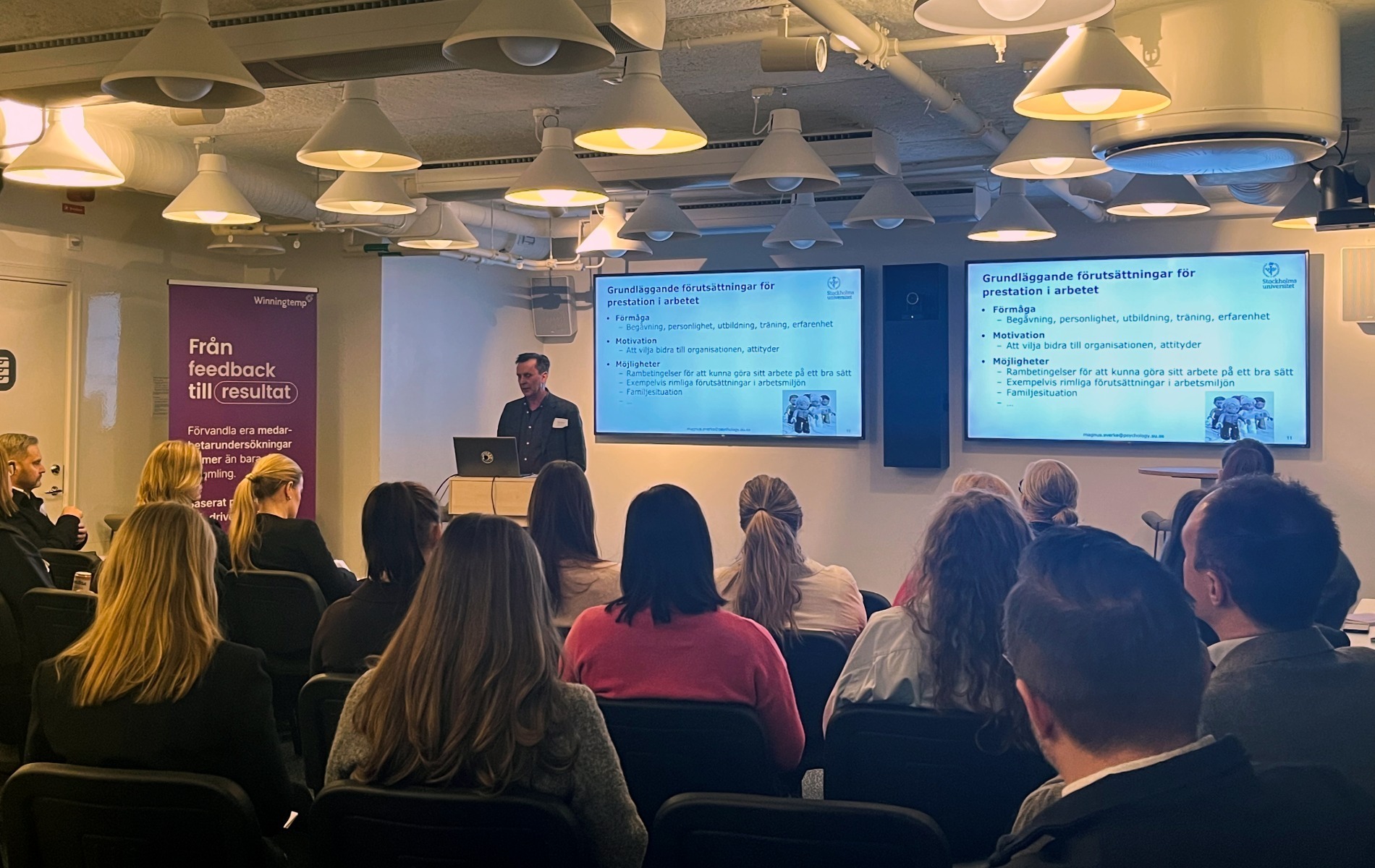
In a time of rapid change, rising demands, and intensifying competition for talent, the question of sustainable performance is more central than ever. This was also the common thread when Benifex Stockholm, together with Winningtemp, hosted a lunch seminar with Magnus Sverke, Professor of Work and Organizational Psychology at Stockholm University.
During an inspiring and insightful lecture, we explored evidence-based research on what truly drives a sustainable working life – in practice.
And the message was clear: everyone benefits from a healthy work environment.
What do we mean by sustainability in working life?
Magnus Sverke began by defining workplace sustainability. Sustainability is about the whole picture – both performance and wellbeing – and includes:
- Motivation
- Job satisfaction
- Work performance
- Wellbeing
- Low sickness absence
- Physical health
- Recognition and pride
- Meaningfulness
- Engagement
Two perspectives we must hold simultaneously
Traditionally, research on working life has followed two tracks:
1. Work environment focus
Emphasis on stressors, risk factors, and workplace issues – and how these relate to stress reactions, ill health, and sickness absence.
2. Organizational focus
Focus on leadership, organizational design, and success factors related to job satisfaction, engagement, retention, and performance.
Magnus Sverke argues that we must keep both perspectives in view simultaneously. It is not enough to reduce risks – we must also actively build the right conditions for engagement and performance.
Three fundamental human needs
A central part of the lecture focused on need theory and intrinsic motivation. For genuine motivation to emerge, three fundamental needs must be met:
1. Autonomy – having influence and control over one’s work
2. Competence – being able to use and develop skills, and receive feedback
3. Relatedness – feeling a sense of belonging and connection
When these needs are fulfilled, intrinsic motivation increases, which in turn drives both performance and well-being. However, for this to be sustainable, individuals also need the right organizational conditions. This makes job design crucial.
Research shows that well-designed work should include:
- Variety
- Clear identity (understanding one’s role and contribution)
- Significance (experiencing the work as meaningful)
- Autonomy
- Feedback
When we connect this to the demands often present in work – demands that can be stimulating and developmental when reasonable, but risk leading to stress and ill health if not matched with the right resources – one thing becomes clear: the balance between demands and resources is central to sustainable performance.
This is where the Job Demands–Resources model becomes relevant. High demands are not a problem in themselves – but without sufficient resources, both engagement and health are eroded.
Work is more than salary
Magnus Sverke also highlighted Marie Jahoda’s classic research on unemployment. Losing a job does not only mean losing income. It also means losing:
- Social connection
- Status and identity
- Structure in everyday life
- Meaning
- The opportunity to use one’s competence
This reminds us how central the workplace is in people’s lives – and the responsibility organizations carry in creating sustainable environments. It is about far more than fruit baskets and ergonomic chairs. The work environment is the sum of the organization's conditions – how work is structured, led, and experienced every day.
Everyone benefits from a healthy work environment
Perhaps the most important insight from the seminar was this: a healthy work environment is not a cost – it is an investment.
When we create the right balance between demands and resources, design meaningful work, and strengthen autonomy, competence, and relatedness, we enable:
- Stronger engagement
- Better performance
- Lower sickness absence
- Increased productivity
- Higher job satisfaction
- Greater retention
- Stronger advocacy and employer brand
This is how we build sustainable organizations – where people both thrive and deliver results over time. And ultimately, that is what a strong employee experience is all about.
Do you want to know more about how Benifex can help you build a strong employee experience? Book your demo here.