On February 4–5, we exhibited at the Personal & Chef Stockholm trade fair – an event that truly captures the topics we often talk about: engagement, benefits, leadership, culture, employee communication, wellbeing, and of course, AI in HR. Two intensive days filled with meetings, conversations, and insights into where the HR function is heading.
Here are some of the perspectives that stayed with us a little extra:
The power of small talk – more strategic than you might think
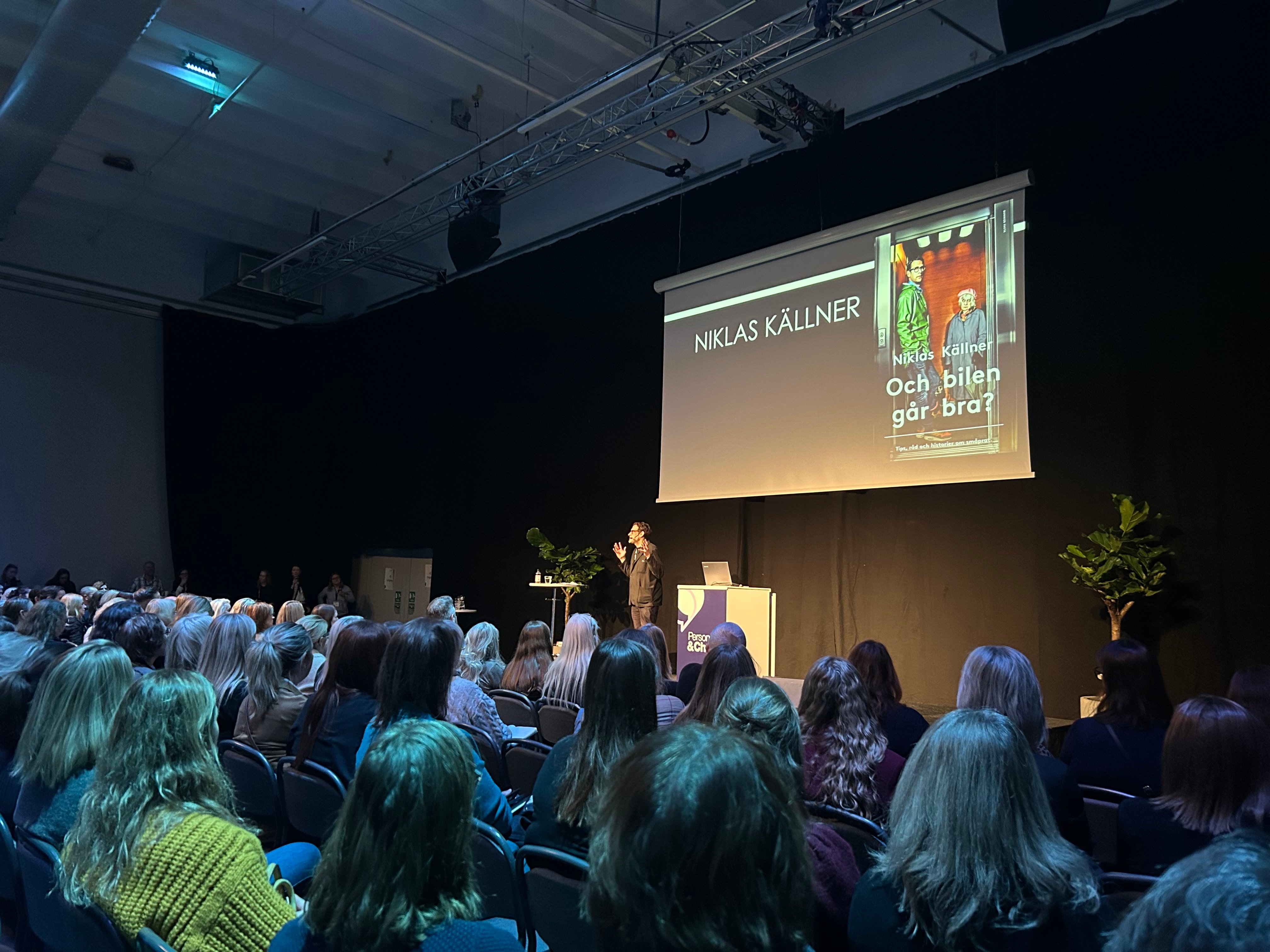
Wednesday morning began with journalist Niklas Källner, known from both TV and Swedish Radio, who spoke about the art of small talk.
The message was clear: small talk isn’t superficial – it’s relational capital. By creating a connection before asking difficult or direct questions, we build trust. This applies to interviews, negotiations, and leadership alike.
Some key takeaways:
- The strength of weak ties – a large, loose network can be invaluable
- Small talk can help make people visible, especially for leaders
- Dare to take time for conversations – and even allow silence to exist
What may feel like small talk to you can mean a great deal to someone else.
AI in HR – not a technology issue, but a people issue
The day continued with HR and AI expert Johannes Sundlo. The focus was on how we actually use AI in practice – and what often stands in the way. One statement that really resonated was: “Technology has stopped being the limitation. We are the limitation.”
AI is no longer an IT issue. It’s a leadership, culture, and trust issue. The discussion touched on:
- Risks of data leakage when employees use open AI tools
- The importance of secure environments where employees can still choose tools that resonate with them
The conclusion was clear: the cost of misuse can exceed the investment required to build the right structure from the start.
Engagement as a competitive advantage
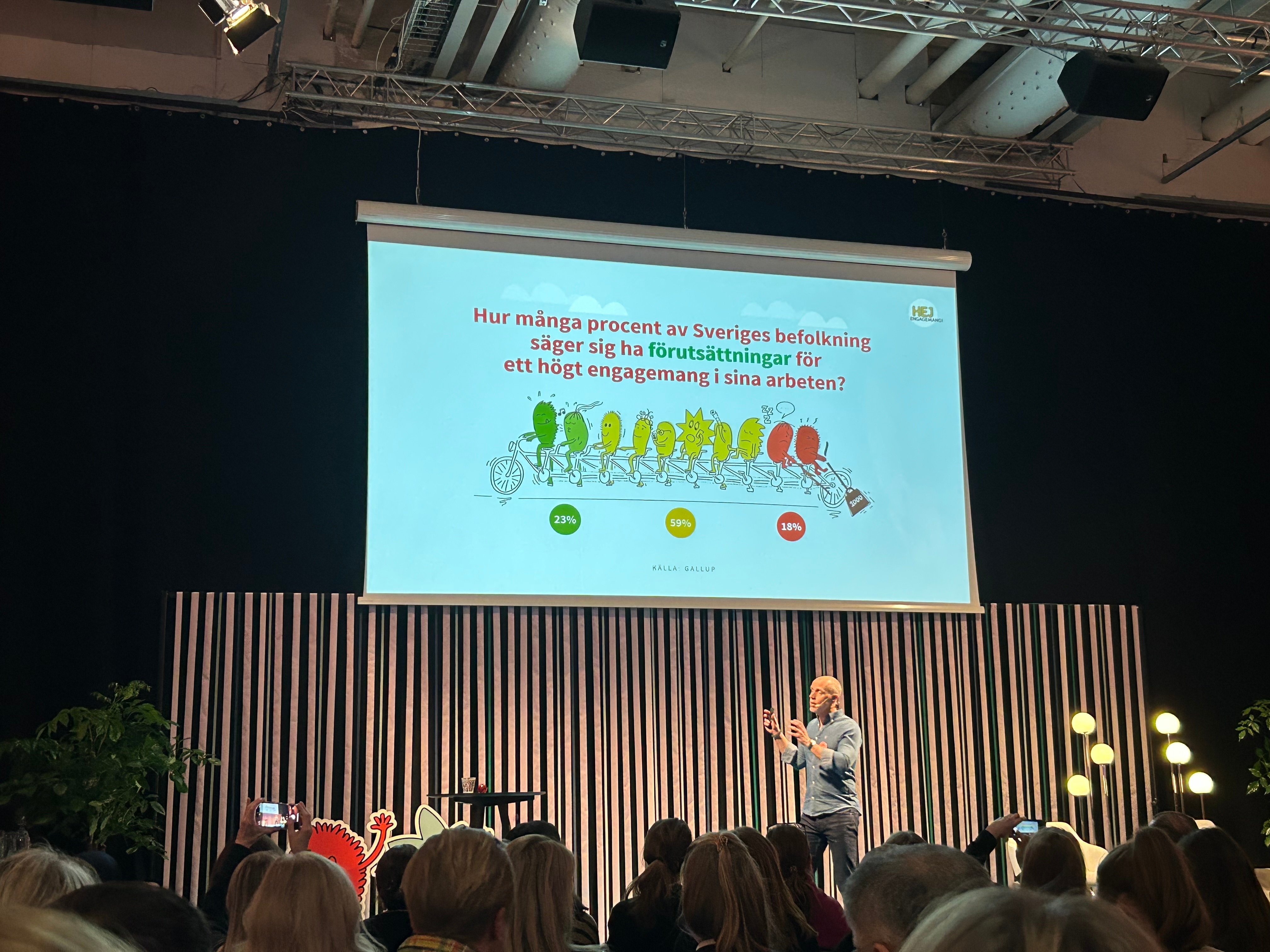
We also heard Niklas Delmar from HejEngagemang! speak about the power of strong employee engagement – a topic that naturally lies close to our hearts.
His goal is to reduce the gap between well-being and performance. Engagement was described as an emotional connection, driven by psychological needs rather than external incentives. When people feel good, experience meaning, and feel a sense of belonging, results follow.
Courage, inclusion, and the leadership of the future
We also attended a panel discussion on “real courage and change,” featuring Amanda Lundeteg (Allbright), Suzan Hourieh Lindberg (Perspectivo), and Ahmed Ali (Creative Solution Company), moderated by Emma Egnell from HejEngagemang!.
The panel emphasized that inclusion should not be treated as a separate layer or side project, but as a quality issue integrated into everything – from recruitment and leadership to supplier requirements. Organizations that work this way also see stronger growth, making it a clear business imperative.
The conversation also highlighted the need for human values in an increasingly complex working life. HR has more on its plate than ever, and meeting the future requires multiple perspectives and leadership that enables them.
One quote from Ahmed Ali that truly resonated was: “Step down from your high horses and invite the Trojan horses in.” In other words: invite more voices into the conversation – don’t let leaders be the only ones talking about inclusion and change.
Automation, systems, and AI continue to develop rapidly. But at some point, we need to pause and ask ourselves: where do humans fit in? After all, it’s people who sit behind the controls. To lead, create, and make sound decisions, we need time for recovery, reflection, and development.
A sustainable working life – where benefits play a key role
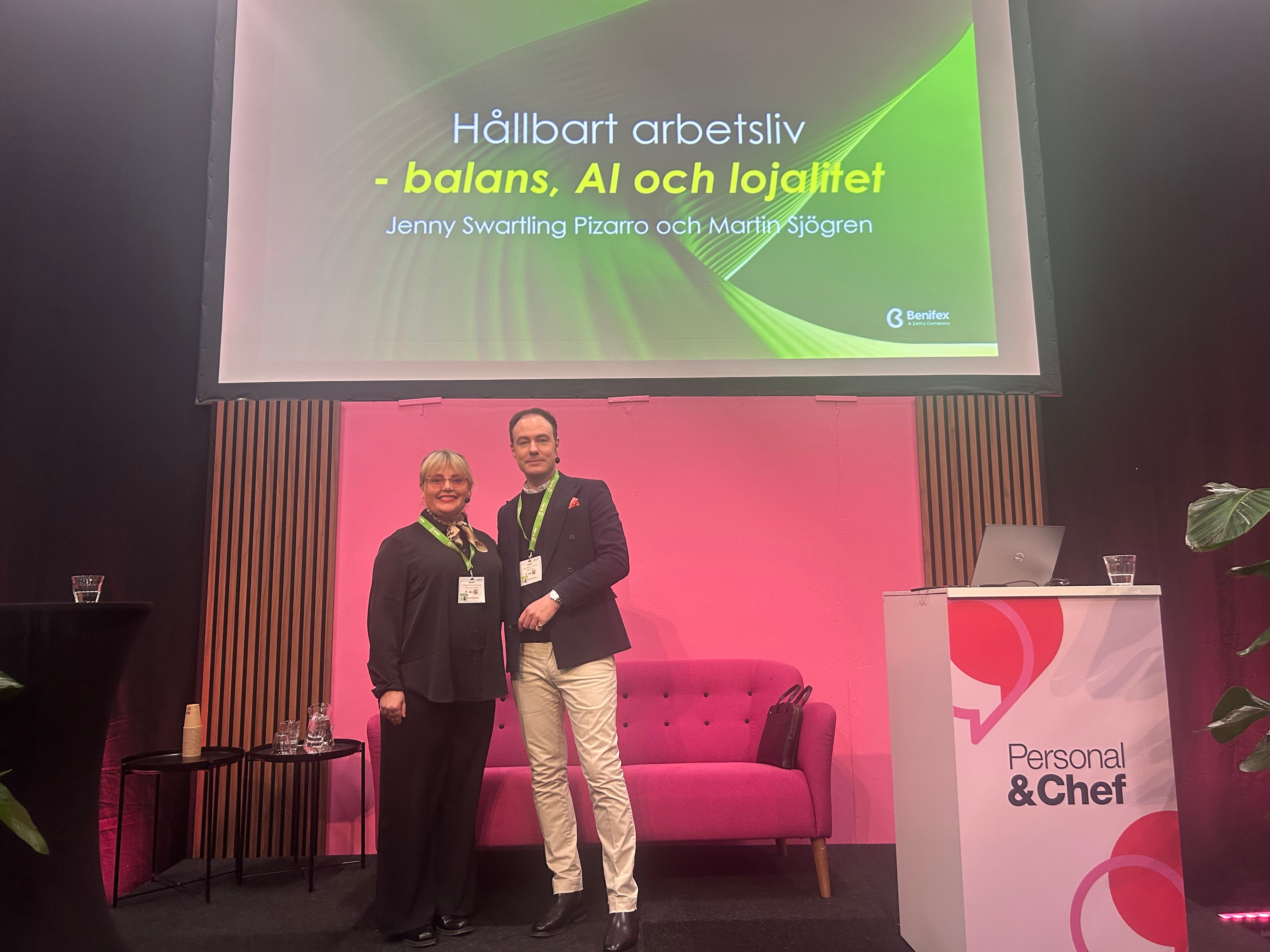
Our own stars, Jenny Swartling Pizarro and Martin Sjögren, hosted a highly appreciated session on both Wednesday and Thursday, focusing on what may be our most important topic of all: the sustainable working life.
They highlighted the importance of building engaged relationships between employers and employees – a crucial foundation for both well-being and long-term productivity. A key message was that working with benefits is not something done on the side, but a strategic process that must be integrated into the business.
One telling example: 81% of people who are willing to work longer say they need higher pay or better benefits. This clearly shows the strong connection between working conditions, motivation, and long-term sustainability.
Jenny and Martin also explored the difference between intrinsic and extrinsic motivation:
- Intrinsic motivation comes from internal drivers such as skills development, clear career paths, community, equality, and meaningful activities.
- Extrinsic motivation is driven by external incentives like security and rewards – for example, occupational pensions, wellbeing benefits, bicycle benefits, and initiatives focused on women’s health.
One particularly interesting insight was that motivational drivers differ between sectors (according to Swedish data). Employees in the Swedish public sector tend to be more motivated by intrinsic factors and engagement-driven benefits, while those in the Swedish private sector are more often driven by extrinsic factors that have a stronger impact on metrics such as eNPS.
A reminder that one size never fits all – and that a sustainable working life requires understanding, differentiation, and a holistic approach.
.jpeg?width=800&height=600&name=Image%20(9).jpeg)
Thank you to everyone who visited our booth!
Personal & Chef Stockholm 2026 truly reinforced one important message: the future of work is not won by smart technology alone – but by human leadership, engagement, and culture.
An extra thank you to everyone who stopped by chatting with us. We’re taking a lot of energy with us into the rest of the spring!